Links
Important Dates
Last date for full Submission Deadline:
September 10, 2026
Last date for full Notification of Acceptance:
September 30, 2026
Last date for full Camera Ready Submission:
October 10, 2026
Contact Us
Conference Secretary
icmme@acamail.org
Keynote Speakers
-
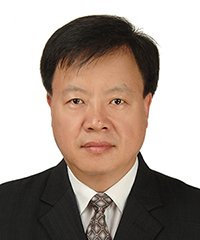
Renke Kang
Professor, Dalian University of Technology, China.
Research field: Precision/Ultra-precision Machining Technology, Non-traditional Machining Processes, Semiconductor Manufacturing Technology and Equipment.
Renke Kang, Professor and Doctoral Supervisor at the School of Mechanical Engineering, Dalian University of Technology, China. He is a recipient of the Special Government Allowance of the State Council and a core academic leader in the field of advanced manufacturing in Liaoning Province. As the chief expert of national key R&D programs and national basic strengthening key projects, he has long been dedicated to tackling core manufacturing technologies for national major needs. His primary research interests include precision/ultra-precision machining technology, special processing technology, as well as semiconductor manufacturing technology and equipment. He has presided over more than 30 research projects, including National Key R&D Programs, 973 and 863 Program projects, major national science and technology special projects, key and major National Natural Science Foundation projects, and enterprise commissioned projects. He has published over 300 academic papers and monographs including Grinding Technology of Difficult-to-Machine Materials and Theory and Technology of Wafer Ultra-precision Grinding. He holds 11 international invention patents and over 210 Chinese invention patents. His research achievements have earned him one First Prize and one Second Prize of the National Technological Invention Award, one China Patent Silver Award, and six first-class provincial and ministerial-level awards. Additionally, he undertakes undergraduate and postgraduate teaching courses and has been awarded the Excellent Graduate Supervisor Team of Liaoning Province in 2022, with his students winning multiple innovation competition awards and prestigious scholarships.
-
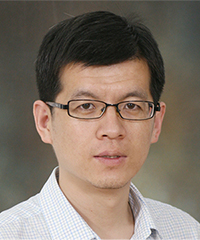
Jingchuan Wang
Professor, Shanghai Jiao Tong University, China.
Research field: Robot Perception and Planning Technology; Service Robot Control Technology.
Jingchuan Wang (Senior Member, IEEE) received the B.Eng., M.Phil., and Ph.D. degrees in control theory and control engineering from Shanghai Jiao Tong University (SJTU), Shanghai, China, in 2002, 2005, and 2014, respectively. He is currently a Professor with the Department of Automation, SJTU. He was funded by the National Key Research and Development Program of China, the Natural Science Foundation of China, and the Innovation Action Plan of Shanghai. His research interests mainly focus on advanced mechatronic control, simultaneous localization and mapping (SLAM), medical robotics, machine vision, and autonomous driving. His current research interests include service robots and mobile robot’s localization and navigation. Dr. Wang has presided over a series of key scientific research projects, including the National Natural Science Foundation of China, National Key R&D Programs of China, the ITER international cooperation project, and scientific research projects funded by the Shanghai Science and Technology Commission. He has published numerous high-quality journal and conference papers in top-tier international journals and prestigious IEEE conferences such as ICRA and IROS. He has also received multiple international conference best paper awards in the field of robotics, making systematic and innovative achievements in the fields of autonomous robots and intelligent control.
-
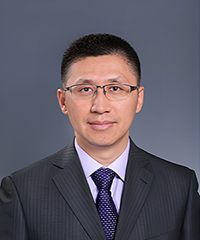
Mingguo Zhao
Professor, Tsinghua University, China.
Research field: Artificial General Intelligence Platform for Brain-Inspired Chips and Brain-Inspired Computing, and Neuromorphic Computing-Based Robot Control.
Mingguo Zhao (Member, IEEE) received the Ph.D. degree in mechatronic engineering from the Harbin Institute of Technology, Harbin, China, in 1995, 1997, and 2001, respectively. He is currently a Professor with the Department of Automation, Tsinghua University, Beijing, China. His research interests include constructing artificial general intelligence research platforms integrating brain-inspired chips and brain-inspired computing, as well as brain-inspired computing-based robot control. He has presided over a number of national research projects, including National Natural Science Foundation projects and National High-tech R&D Program (863 Program) projects. His core research achievement on heterogeneous brain-inspired chip architecture was published as a cover paper in Nature, selected as one of the Top 10 Scientific Advances of China in 2019, and supported by the National Science and Technology Innovation 2030 Major Projects. He has also obtained a number of authorized national invention patents. Dr. Zhao has received many academic and teaching honors, such as the Second Prize of the Ministry of Education Natural Science Award, the Second Prize of the National Teaching Achievement Award, and the Silver Medal of the Geneva International Invention Exhibition.
-
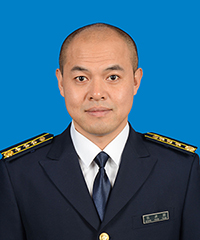
Hongpeng Zhang
Professor and Dean of Marine Engineering College of Dalian Maritime University, China.
Research field: Development of Smart Sensor Technologies; Equipment Fault Diagnosis; Intelligent Operation and Maintenance Technologies.
Hongpeng Zhang received the Ph.D. degree in maritime engineering from Dalian Maritime University, Dalian, China, in 2005.,He is currently a Professor and a Ph.D. Supervisor with the Marine Engineering College, Dalian Maritime University, as well as a National Leading Talent and Liaoning Provincial Science and Technology Innovation Leading Talent. His research interests mainly include marine engineering, micromechanics, microfluidic chip technology, intelligent sensor development, equipment fault diagnosis and intelligent operation and maintenance technology. He has presided over a series of national and provincial research projects, including two National Natural Science Foundation projects. He has published numerous high-quality SCI-indexed papers in top Q1 journals, such as IEEE Transactions on Industrial Electronics, IEEE/ASME Transactions on Mechatronics and IEEE Sensors Journal. He holds 18 authorized national invention patents and has undertaken many teaching reform projects. He has received multiple provincial and ministerial scientific and technological and teaching awards, and serves as a professional journal editorial board member and authoritative academic reviewer.
-
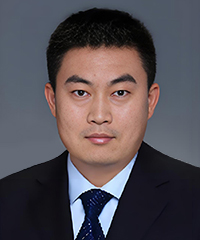
Yingxiang Liu
Professor, Harbin Institute of Technology, China.
Research field: Piezoelectric Drive Theory and Technology (Piezoelectric Actuators, Piezoelectric Robots, Piezoelectric Transducers, Ultrasonic Vibration Utilization, Active Vibration Control); Robot Theory and Technology (Soft Robots, Micro Robots, Artificial Muscles, Fish Robots).
Yingxiang Liu is a full professor of the School of Mechatronics Engineering at the Harbin Institute of Technology, and a recipient of the NSFC Excellent Young Scholars Fund. He is also a member of the State Key Laboratory of Robotics and System at Harbin Institute of Technology. He received the B.S. degree, M.S. degree and Ph.D. degrees from the School of Mechatronics Engineering at Harbin Institute of Technology, PR China, in 2005, 2007 and 2011, respectively. He joined the School of Mechatronics Engineering, Harbin Institute of Technology, in 2011, where he has been a Professor, since 2013; he is a member of the State Key Laboratory of Robotics and System, Harbin, China; and also the Director of the Laboratory of Advanced Actuation Technologies, Harbin, China. He was a Visiting Scholar with Mechanical Engineering Department, University of California, Berkeley, CA, USA, from 2013 to 2014. His research interests include piezoelectric actuators, piezoelectric robots, ultrasonic motors, ultrasonic transducers, micro-nano manipulations, piezoelectric micro jets, vibration control, fish robots, soft robots, micro robots and artificial muscles. Dr. Liu has served as an Associate Editor of IEEE Transactions on Industrial Electronics, IEEE Transactions on Robotics, IEEE Access, Journal of Field Robotics, and a Topic Editor of Materials. He has published two monographs and over 300 papers, over 270 papers have been published on international journals (NC, AFM, AS, IEEE TRO, IEEE TIE, ENGINEERING, CBS, RESEARCH, DEVICE, IEEE TMECH, MSSP, IJMS, etc). He has applied nearly 180 invention patents, over 130 patents have been granted.
-
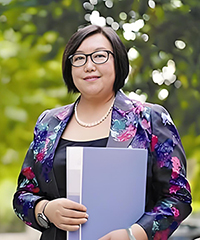
Yunxian Cui
Professor, Dalian Jiaotong University, China.
Research field: Sensor and Actuator Theory and Applications; Advanced Manufacturing Technology.
Yunxian Cui received the M.E. and Ph.D. degrees in mechatronic engineering from Dalian University of Technology, Dalian, China, in 2003 and 2011, respectively. She is a Professor and a Doctoral Tutor with the School of Mechanical Engineering, Dalian Jiaotong University, Dalian. She has undertaken dozens of research projects as Principal Investigator, including grants from the National Natural Science Foundation of China (NSFC), the Natural Science Foundation of Liaoning Province. She holds 12 authorized national invention patents as the first inventor and has received multiple provincial and ministerial-level scientific and technological awards, including the Second Prize of Liaoning Provincial Technological Invention Award as the lead recipient in 2013. Her research interests include sensing and measurement control, and advanced manufacturing technology.
-
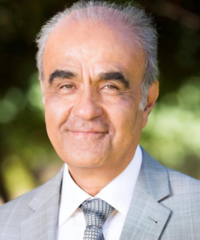
Kazem Abhary
Associate Professor, University of South Australia, Australia.
Research field: Engineering; Mechanical Engineering; Manufacturing Engineering; Applied Mathematics; Information and Computing Sciences.
Kazem Abhary obtained his Bachelor and Master of Engineering in Mechanical Engineering from Tehran University, and Masters by Research and Ph.D. in Mechanical Engineering from the University of Manchester, England. Since then he has been continuously engaged in tertiary education and has acted as a consulting engineer to variety of industries. His publications, exceeding 200, include numerous international journal and conference papers, two handbook chapters, 13 book chapters, five books, and a bi-lingual (English-Persian) Mechanical Engineering Lexicon. He has also published two books and a number of non-technical articles on social, spiritual and literary issues. He has undertaken and supervised over 140 engineering projects in Australia, Singapore, Malaysia and Iran, has educated a few thousand engineers and supervised many post-graduate students (Masters and PhD). He has been on the international advisory board of a number of international engineering conferences and engineering journals; associate editor of an engineering journal; reviewer to a number of international engineering journals and conferences, and keynote speaker to international engineering conferences and engineering graduation ceremonies. His publications include eight new methods in Design of Machinery (Mechanical Design, Mechanisms and Vibrations) some of which have won awards and downgraded project-type design-problems to the level of classroom tutorials. He is also a co-inventor of a machine. He was on the Council of the University of South Australia as the representative of academics for two terms (2001-2004) and has been a member of Standards-Australia/Standards-New Zealand since 1994.
-
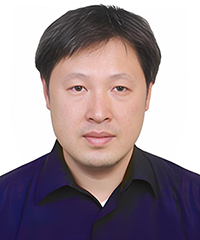
Lijia Pan
Professor, Nanjing University, China.
Research field: Flexible Pressure / Temperature Sensor; Wlectronic Skin; Tactile Sensor And System; Organic Transistors; Neuron Transistors; Synapse Transistors; and Integration with Sensor Arrays; Conductive Polymer Materials; Wearable Electronic Materials and Devices; Biomedical Electronic Devices; Artificial Intelligence Devices.
Lijia Pan (Senior Member, IEEE) received the Ph.D. degree in polymer physics from the University of Science and Technology of China, Hefei, China, in 2003., He was a Visiting Scholar to Prof. Zhenan Bao’s Group at Stanford University, Stanford, CA, USA. He is currently a Full Professor with the School of Electronic Engineering, Nanjing University, Nanjing, China. His research interests include conducting polymers and skin-inspired electronic devices., Dr. Pan received the National Natural Science Fund for Distinguished Young Scholars from 2019 to 2023. More than 160 articles were published in peer reviewed journals including Nature Sustainability, Nature Communications, PNAS, Adv. Mater., Nano lett., ACS Nano, Adv. Funct. Mater., Energy & Environment. Sci.,, Acc. Chem. Res., and IEEE Electron Dev. Lett. Pan's articles were cited more than 13000 times, with H-factor 50, and 14 ESI high cited papers.
-
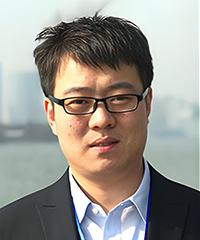
Ning Sun
Professor, Nankai University, China.
Research field: Tracking Error; Adaptive Control; Control Method; Control Input; Hardware Experiments; Actuator; External Disturbances; Tracking Performance; Transient Performance; Underactuated Systems; Sliding Mode Control; Stability Analysis; State Variables; Comparative Method; Control Design.
Prof. Ning Sun (Senior Member, IEEE) received the B.S. degree (Hons.) in measurement & control technology and instruments from Wuhan University, Wuhan, China, in 2009, and the Ph.D. degree (Hons.) in control theory and control engineering from Nankai University, Tianjin, China, in 2014.,He is currently a Professor with Nankai University and Shenzhen Research Institute of Nankai University, Shenzhen, China. His research interests include intelligent control for mechatronic/robotic systems with an emphasis on (industrial) applications., Dr. Sun received the Machines 2021 Young Investigator Award, the prestigious Japan Society for the Promotion of Science (JSPS) Postdoctoral Fellowship for Research in Japan (Standard) in 2018, the International Journal of Control, Automation, and Systems Best Associate Editor Award in 2023, the IEEE Transactions on Systems, Man, and Cybernetics: Systems Outstanding Associate Editor in 2024, and several journal/conference best/outstanding paper awards. He serves as an Associate Editor/a Technical Editor for several journals, including IEEE Transactions on Industrial Electronics, IEEE Transactions on Intelligent Transportation Systems, IEEE Transactions on Systems, Man, and Cybernetics: Systems, and IEEE/ASME Transactions on Mechatronics.
-
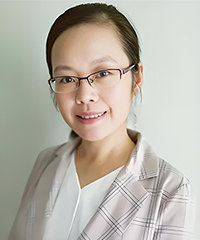
Ting Zou
Associate Professor, Memorial University of Newfoundland, Canada.
Research field: Mechatronics, Robotics; Bio-Inspired Robots; Machine Learning for Robotic Systems; Nonlinear Motion Control; MEMS.
Ting Zou (Member, IEEE) received the B.Sc. degree in electrical engineering and the M.Sc. degree in automatic control engineering from Xi'an Jiaotong University, Xi'an, China, in 2005 and 2008, respectively, and the Ph.D. degree in robotics and mechatronics from McGill University, Montreal, QC, Canada, in 2013.,She is currently an Associate Professor with the Department of Mechanical and Mechatronics Engineering, Memorial University of Newfoundland, St. John's, NL, Canada. Her current research interests include mechanism design, control of biologically inspired robots, advanced human–robot interaction, soft robots, and MEMS., Dr. Zou is a Member of the ASME and Canadian Society for Mechanical Engineers.
-

Muhammad Junaid
Associate Professor, China University of Mining and Technology, China.
Research field: Short-Circuit Current; Current Limitations; Fast Switching; Rated Voltage; Short-Circuit Fault; Electric Aircraft; Electric Field Strength; Electrode Gap; Electrode Geometry; Electrode Materials; Power System.
Muhammad Junaid (Senior Member, IEEE) received the Ph.D. degree in electrical engineering from the School of Electrical Engineering, Xi’an Jiaotong University, Xi’an, China, in 2020. Since late 2020, he has been serving as an Associate Professor at the School of Electrical Engineering, China University of Mining and Technology, Xuzhou, China. Previously, he was a Research Fellow at King’s College Aberdeen, University of Aberdeen, Scotland, and a Lecturer in Power Engineering at the Department of Electrical Engineering, Sarhad University of Science and Information Technology, Pakistan. He has been involved in ten funded projects, presiding over eight of them, holds 11 patents, and 56 publications. His research focuses on alternatives to the SF6 gas and key technologies for fault current interruption, including vacuum interrupters, cryogenic dielectrics, and high voltage insulation. Dr. Junaid He is a member of the Chinese Society of Electrical Engineering (CSEE), the European Society for Applied Superconductivity (ESAS), and IAENG Hong Kong, and a life member of the Pakistan Engineering Council (PEC).
-
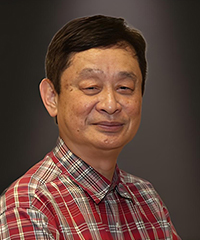
Tien-Chien Jen
Professor, University of Johannesburg, South Africa.
Research field: Atomic Layer Deposition; Cold Gas Dynamics Spraying Deposition; Hydrogen Generation/Filtration/Storage; Solar Cell; Fuel Cell; Nano Fabrication; Nano Structure and Materials, Renewable Energies; Bio-fuel, etc.
Prof Jen obtained a PhD in Mechanical and Aerospace Engineering from UCLA in 1993. Prof Jen joined the University of Johannesburg in 2015 after serving more than 15 years at the University of Wisconsin–Milwaukee. He has secured major competitive research funding from agencies such as the US National Science Foundation, the US Department of Energy, and the EPA, with a total research funding portfolio of approximately $3.0 million. After joining the University of Johannesburg, Prof Jen was awarded an NRF NNEP grant (~USD 1 million) in 2017 to establish advanced Atomic Layer Deposition facilities, the first of their kind in South Africa and among the best in Africa and the world. While at the University of Johannesburg, Prof Jen established a Joint Research Centre with Nanjing Tech University on Sustainable Materials and Manufacturing and served as Director of the Atomic Layer Deposition Research Centre. Very recently, as the co-director, a joint research centre with Shandong University of China on Green Energy and Resources was officially established in 2025.
Prof Jen is a Fellow of ASME (American Society of Mechanical Engineers) and an elected member of Academician in the Academy of Science of South Africa (ASSAf). He has served the NRF/DST first-tier South Africa Research Chair (SARChI) Chair for Green Hydrogen since 2023. Prof Jen's Google Scholar citations exceed 16,000 with an h-index of 61. He is also among the top 2% researchers in the world according to the Stanford University Report. Prof Jen has authored over 700 peer-reviewed publications, including 480 journal articles, 36 book chapters and 10 books, reflecting his strong international research leadership in manufacturing, thermal science, and advanced materials.
-
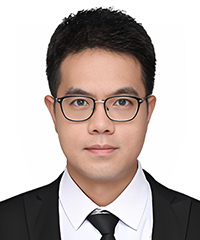
Yiming Zhang
Professor, Fuzhou University, China.
Research field: Wireless Power Transfer; Power Electronics; Renewable Energy.
Yiming Zhang (Senior Member, IEEE) received the B.S. and Ph.D. degrees in electrical engineering from Tsinghua University, Beijing, China, in 2011 and 2016, respectively. He was a Postdoctoral Researcher with San Diego State University, San Diego, CA, USA and a Research Fellow with Nanyang Technological University, Singapore. He is currently a Full Professor with Fuzhou University. He has authored 1 book from Springer, authored or co-authored more than 100 technical papers in journals and conference proceedings. His research interests include wireless power transfer and resonant converters. Dr. Zhang was the recipient of the Outstanding Doctoral Dissertations of Tsinghua University in 2016. He was recognized as an Outstanding Reviewer for IEEE Transactions on Power Electronics in 2019 and 2022, and a Distinguished Reviewer for IEEE Transactions on Industrial Electronics in 2020. He was the Publication Chair of the international conference 2022 International Conference on Wireless Power Transfer.